How can you tell if a stone is man made?

When purchasing jewelry or gemstones, it is vital to determine whether the item is real. Treated, or man-made gemstones can look identical to natural, untreated ones, but they are less expensive and have no long-term worth due to their naturalness and scarcity of occurrence.
The goal of this page is to explain the distinction between "real" and "fake" gemstones, how to tell them apart, and where the differences are for rapid and easy identification.
Fake gemstones appear lovely and are reasonably priced, but they never have any significant value because they are not natural. It is critical for you to understand what you are being provided or faced.
Man made gemstones: What are they?
Natural gemstones are rare and valuable natural precious stones. Many people find natural stones extremely pricey. As a result, gemstones are frequently counterfeited, which implies "imitated", "treated", or artificially manufactured.
There is a distinction between "genuine" and "fake" gemstones. Counterfeit gemstones are false gemstones. Only natural jewels are considered genuine. To further define and understand the terminology, the following three categories must be distinguished:
- Synthetic Gemstones: These are gemstones that are created in a laboratory but have the same chemical composition, physical properties, and optical characteristics as natural gemstones. Synthetic gemstones are not "fake" or "imitation"; they are genuine gemstones produced through controlled processes to replicate the natural conditions under which gemstones form.
- Imitations: Imitation gemstones are materials that resemble natural gemstones but are made from different substances. They are designed to look like real gemstones but do not have the same chemical or physical properties. Common examples include cubic zirconia (imitating diamonds) or glass (imitating various colored gemstones).
- Treated Gemstones: Treated gemstones are natural gemstones that have undergone enhancement processes to improve their appearance. These treatments can include heating, irradiation, or filling of surface-reaching fractures. Treated gemstones are still considered natural because they retain their original chemical composition, but their appearance may have been altered to enhance color or clarity.
Identification methods
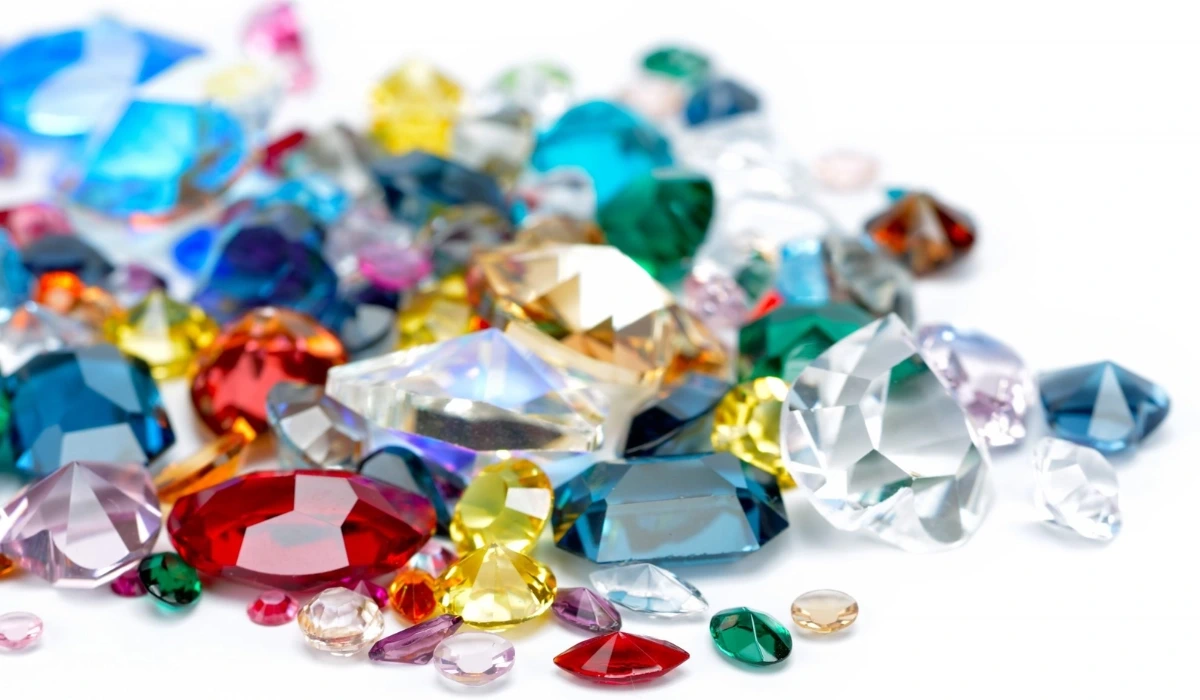 There are some methods you can follow to identify gemstones. Following are the best 4 methods:
Hardness test
It should be remembered that each mineral has a specific hardness. This attribute is characterized by the 10-step Mohs scale, with diamond being the hardest stone. The hardness of rubies, sapphires, emeralds, and other gemstones can be determined using the Mohs table and a handheld meter.
Mineral hardness is measured on a range of 1 to 10 using inexpensive meters that are widely available. However, unprofessional tools are frequently unable to be calibrated, therefore test results are not always reliable. If you want an accurate examination of a mineral's hardness and characteristics, consult a gemologist. The specialist will use a refractometer to precisely evaluate the value of the stone.
Spectroscopy
Gemstones typically have a very bright color and an elevated refractive index. How do you identify a stone in a ring? A natural mineral's color is rarely flawless, consistent, or ideal. Light flowing through the inside of a gemstone may divide, generate a sheen, scatter color, or flicker. Artificial stones and zircons, on the other hand, have the property of allowing light to travel through them readily. Imitation minerals' colors are usually homogeneous, with no hazy streaks or inclusions, such as particles from other crystals, fissures, or bubbles.
Heat testing
There are various methods for identifying gemstones at home, even if you do not have a magnifying glass or other tools on hand. The temperature test is one of the simplest ways to detect diamonds from glass and crystal. How does this work? Simply set the stone in the sunlight or white water. Alternatively, direct heated air from a hair drier onto the stone. The heat causes the man-made materials to warm up, whereas the diamond maintains a constant, unchanging temperature.
Certification
When appraising gemstones, an expert opinion is very useful for insurance purposes. A gemological laboratory, an expert opinion, or a gemstone findings report are all useful for a thorough study of the gemstone.
A gemological report is unquestionably the most reliable approach to identify a genuine gemstone. It should also be noted that not all jewelers and goldsmiths are gemologists. If you want a sound, dependable appraisal, you should see a professional; this is the safest and finest option,
Are Lab-Created Gemstones Worth Buying?
The value of lab-created gemstones lies in their affordability and ethical considerations. They are often priced lower than natural stones of similar quality, making them accessible for various jewelry designs. Additionally, their production avoids the environmental and ethical concerns associated with mining.
To buy any kind of gemstone based jewelry you should visit an authentic buyer. Visit Mangtum.com to get the best products.
Verdict
At Mangtum.com, we prioritize transparency and education when it comes to gemstones. Understanding the differences between natural and man-made gemstones empowers consumers to make informed choices based on their preferences and values. Whether you choose a natural gemstone prized for its rarity or a lab-created gemstone known for its affordability and ethical benefits, knowing how to identify each type ensures that your jewelry purchase aligns with your expectations.
Related Blogs

The Ultimate Guide to Different Types of Beads for Jewelry & Bracelets
Jun 1, 2026
Understanding Gemstones: Synthetic, Simulated, and Created
Feb 24, 2026
What is Aventurine (Slave) | Meaning, Types, and Benefits
Mar 2, 2024
A Deep Dive into Precious Gemstone Lore and Legacy
Sep 13, 2025
How to Clean Old Jewelry: A Detailed Guide
Nov 2, 2024